The Biblical Anchor for Year 1: Ancient History
There’s a unique kind of excitement that comes with planning a Year 1: Ancient History homeschool year. Together, you and your kids will map the Fertile Crescent, read about Egyptian pharaohs, explore ancient Mesopotamia, and watch the rise and fall of the world’s earliest empires.
As a Christian homeschool parent, you want your children to see how God’s story intersects with secular world history.

If you look closely at most homeschool history programs—even the ones written from a solid Christian perspective—you’ll notice a frustrating gap. Because history curricula have a massive timeline to cover, they can usually only offer a brief, surface-level nod to biblical characters as they pass by. Abraham, the Exodus, and ancient Israel become quick stops on a timeline rather than the core of the ancient narrative.
Your history curriculum has a massive job to do, and it does it well. But it wasn't designed to give your kids deep biblical literacy.
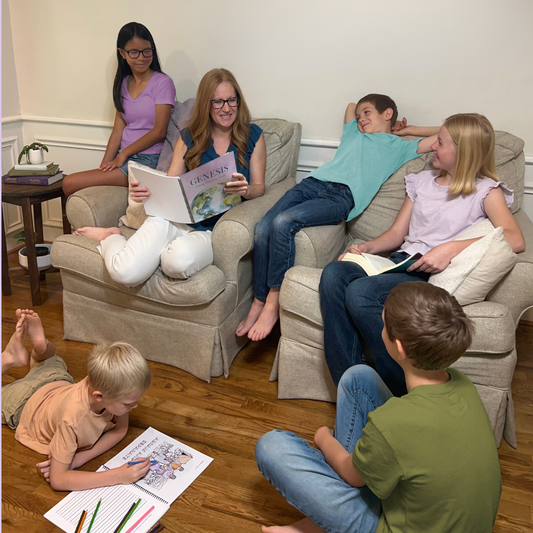
That is exactly why Talk Through the Bible doesn't try to replace your history curriculum. Instead, it runs right alongside it as a parallel tract. It allows your family (ages 8-16) to learn deep, robust biblical history in its actual geographic and cultural reality, right alongside the secular history they’re already studying.

Real Time, Real Places, Real Faith
When our kids are little, a surface-level overview of the Bible is exactly what they need. They do well with simple versions of Noah’s Ark, Moses in the reeds, and Joseph helping to rule Egypt.
But tweens and teens are shifting into a completely different stage of development. They’re starting to think critically, ask hard questions, and look at the world with a discerning eye. If we keep feeding them a shallow version of the Bible, they’ll eventually begin to view Scripture as a collection of fictional Sunday school stories rather than real history.
To build a resilient, intellectually-grounded faith, your older kids need to see that the events of Scripture didn't happen in a vacuum.
The parting of the Red Sea, the giving of the Law at Mount Sinai, and the wanderings in the wilderness happened during a real time, in real geographic locations, right alongside the worldly cultures and empires your kids are reading about in their history books. When they realize that the Pharaoh of the Exodus was a real ruler of a real global superpower, their understanding of God's sovereignty completely transforms.

Why the Old Testament is the Ultimate Anchor for Ancient History
If you want your kids to truly understand the ancient world, you cannot skip a deep, intentional study of the Old Testament carried out using Middle-Eastern eyes. The Pentateuch (Genesis through Deuteronomy) is the ultimate collection of primary source documents for the ancient Near East. Studying it chronologically gives your kids the foundational worldview context for every other ancient culture they encounter.
When you drop below the surface of a basic overview, the Old Testament forces your tweens and teens to use critical thinking to bridge science, faith, and history. Instead of looking at a colorful drawing of a wooden boat, a deep study allows them to tackle the logistics of how the animals fit on the Ark. Instead of reading the Flood as an isolated Bible story, they can examine how global flood legends from completely different ancient civilizations all over the world actually support the geological evidence of a worldwide flood. And instead of viewing Joseph’s rise to power in Egypt as a lucky stroke of good fortune (he was actually very unhappy, judging by the names he gave his sons), they can explore how the distinct political climate of the Middle Kingdom provided the perfect historical backdrop for a Hebrew foreigner to be elevated to second-in-command over the empire.
By treating the Old Testament with the historical and theological weight it deserves, your kids stop viewing the Bible as a separate "Sunday subject." They begin to see it for what it truly is: the historical backbone of the ancient world.

How Talk Through the Bible Delivers the Solution
Recognizing that your tweens and teens need a deep, historically grounded study of the Old Testament is the first step. The next step is finding a tool that facilitates that depth without adding more busywork to an already packed homeschool day.
This is where Talk Through the Bible is distinctly different from standard Bible curricula.
It’s Discussion-Based, Not a Workbook
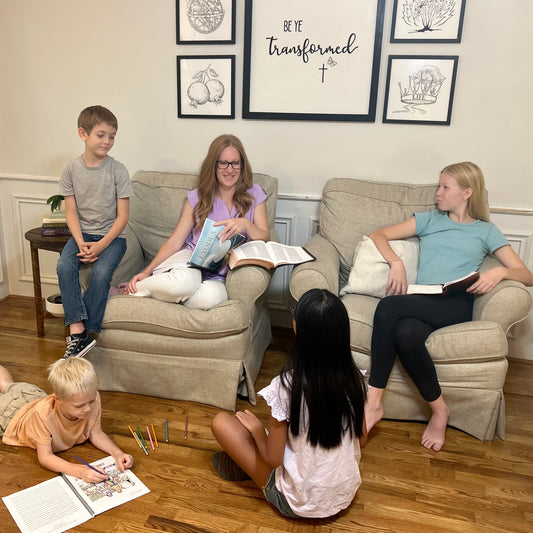
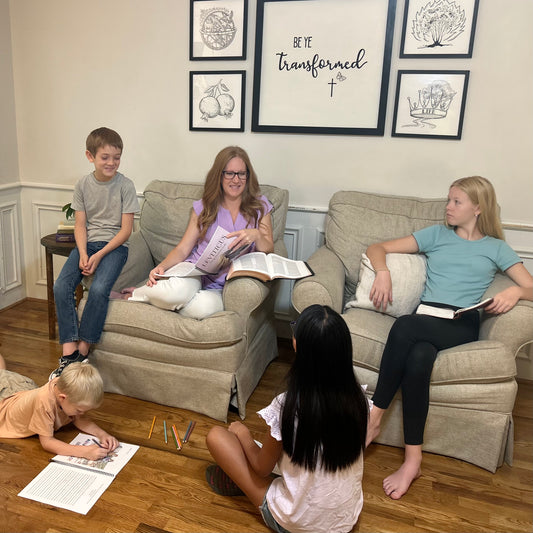
Most Bible studies rely on workbooks that ask kids to regurgitate facts. Talk Through the Bible completely ditches the busywork. Instead, it uses an open-and-go discussion format. Rather than silently checking off boxes on a worksheet, you and your kids are having real, in-depth conversations. The discussion-driven guide forces them to think critically, articulate what they believe, defend their answers, and intellectually engage with the text.
It Unites the Whole Family
As a homeschool mom, you don't have the time or the energy to juggle four different Bible levels for four different kids. Because our curriculum is centered entirely around discussion, your whole family can sit around the table and study the exact same text together. Your teens can tackle the deeper theological and historical implications, while your tweens and upper elementary kids absorb the foundational context. Everyone is being challenged at their own level without you having to buy a mountain of separate curriculum books.
It's Zero-Prep
Year 1: Ancient History already requires a massive amount of reading, map work, and timeline tracking. You do not have time to spend hours prepping intense theology lectures. Our guides are designed to be completely open-and-go. The historical context, biblical text pointers, and thought-provoking discussion questions are all laid out clearly for you. You don’t need a seminary degree or a weekend of prep work; you just open the guide and start talking.

The Freedom of Parallel Tracking
As you look at your homeschool planner, you might be wondering, "How on earth do I align my history lessons with our Bible study readings?" Here’s the best part: You don’t have to. Please do not stress yourself out trying to force lesson four of your history curriculum to perfectly align with chapter four of Genesis. You do not need to skip around in either book. Both curricula are designed to be done cover-to-cover, in their own natural order.
Because both subjects keep your student entirely immersed in the ancient world for the whole school year, you have the total freedom to let them run as parallel tracks. If your history book covers ancient Egyptian culture a few weeks before you encounter Pharaoh in the book of Exodus, that’s completely fine. In fact, it's a benefit! Whether they learn the secular history first or the biblical history first, the dots will naturally connect in their minds. They’re staying in the same historical era all year long, and their brains will do the beautiful work of bridging the two.
Your Year 1: Ancient History Connector
Don’t keep your Bible study isolated while your kids explore the rich depths of the ancient world this year. Give your tweens and teens the tools to see how Scripture fits into world history as a whole, and give yourself the gift of deep, zero-prep family conversations.
Explore our Pentateuch Discussion Guide today and lead your family into the full depth of Scripture with confidence and ease.