Why Use Discussion-based Bible Study
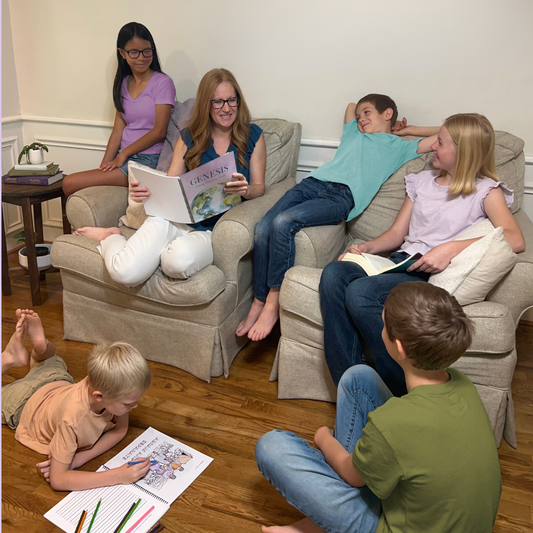
I’ll be the first to admit it: there are days when handing my kids a question-and-answer workbook or devotional sounds amazing. With five kids, life is busy! Those things are convenient and would save me time. However, while they do serve a purpose, they miss the heart of what I want for my kids.

Here’s why I do discussion-based Bible study:
1. Excitement is Contagious
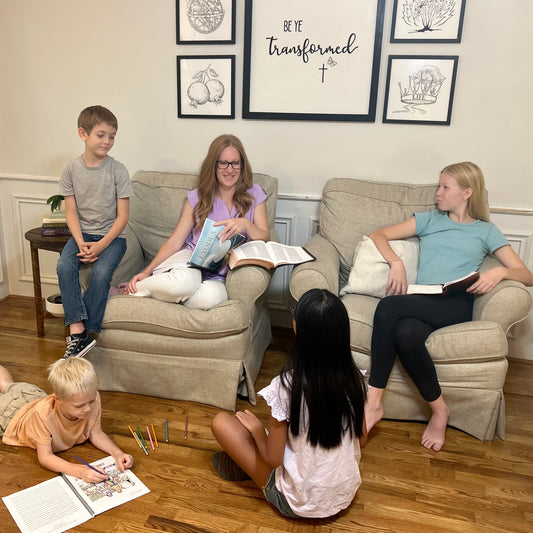
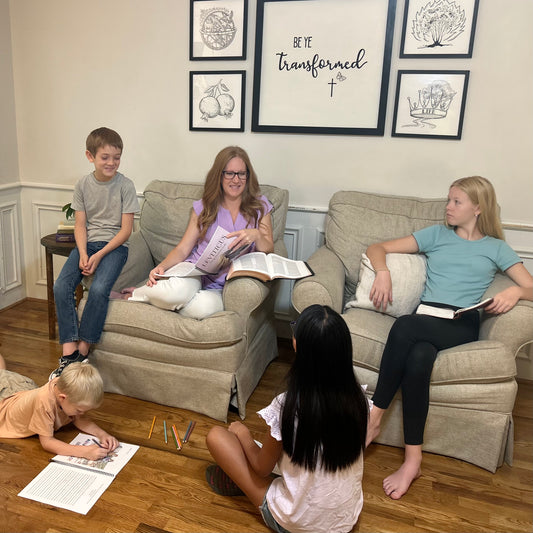
When we sit down and actually talk about what we’re reading, my kids see my face light up. They see how much I love the Word, and that’s caught, not taught. When they see me getting excited as we go down rabbit holes and make connections, they begin to realize that studying Scripture isn't a chore—it’s a treasure hunt. It’s fun!
2. Accurate Teaching
Using a discussion-based curriculum allows me to guide my children into what I believe the Bible teaches. Instead of handing off that responsibility to a workbook author and hoping they get it right, I get to be the one walking beside them, ensuring they’re building a solid foundation of Christian doctrine.
3. Kids Take Ownership
There’s a big difference between being preached at and discovering truth for yourself. When I ask big questions and let my kids process the answers out loud, they aren’t just hearing my faith—they’re finding their own. When they discover a truth through guided discussion, they take ownership of it. It becomes their faith.
4. Preparation for the World
The world is going to ask our kids tough questions about the Bible. If they’ve only ever done surface-level devotionals or workbooks, they might be caught off guard. By tackling the challenging topics of the Bible together, I’m preparing my kids to stand firm when their faith is questioned.
5. Deeper Understanding
Discussions naturally develop a much deeper understanding of Scripture. Through active processing, hearing multiple perspectives, and making connections to our own lives, the Bible becomes real and personal rather than just a history book.
Discussion-based Bible studies help kids to:
- Reveal God’s Character: Memorizing a list of attributes doesn’t tell you who a person is. Seeing them in action does. By studying God’s Word beginning to end, we see who God really is and know Him in a way that a list could never accomplish.
- See the Big Picture: Kids are able to see the Bible as one big, beautiful story from Genesis to Revelation.
- Relate to the Past: They realize human nature hasn't changed. We can relate to the people in the Bible because, just like them, we all make mistakes and all need Christ.
- See it's All Relevant: Kids discover how, through the Holy Spirit, all Scripture can penetrate our hearts, teach us, and change us from the inside out.
As a bonus, this deeper understanding gained through discussion sticks! The stats are amazing—studies show we remember 7x’s more of what we discuss than what we simply read!
At the end of the day, my goal isn't just to check Bible time off our list—it's to see my kids transformed. Moving away from devotionals and toward real, honest conversation has been the best way I’ve found to help my kids truly love the Bible.

Ready to start talking?
If you want to dive into deep, heart-to-heart conversations but aren’t sure where to begin—or you simply don’t have time to research the “tough questions” yourself—we’ve got you covered.
Our Bible study discussion guides are designed to help you lead your kids through the Word, guiding them into what YOU believe, with zero prep required. While we have guides for several books of the Bible, there’s no better place to start than Genesis.
Why start with Genesis?
It builds the foundation for everything that follows, and honestly, it’s a book that’s easy to get kids excited about. Our guide explores:
- Creation: How Genesis and science align
- The Flood: Which animals fit on the ark, how they were fed, and how the flood reshaped the earth
- The Tower of Babel: New languages, genetics, and how we look different but all come from one family—Noah's
- Abraham's Family: God's big promises that set the stage for the rest of the Bible
- The 12 Tribes: Including how Joseph ended up in Egypt to save them from starvation (with resources for a unit study on ancient Egypt)
Tackle Tough Questions Together
Our Genesis guide gives you the tools to discuss things kids (and adults!) wonder about, including:
- How do creation and science line up?
- Who did Cain marry, and was that okay?
- Did Abraham’s prayers actually change God’s mind?
- Why did God choose Jacob over Esau?
- Is sin part of God’s plan?
- If God is merciful, why do "innocent" people suffer?
- How far does God's sovereignty extend?
Each of our studies includes guided discussions through each chapter of the Bible, optional activities, and links to articles and books for when your kids want to dive deeper.
Click to grab our Genesis Discussion Guide and help your kids discover who God is through His Word. Help them build a personal faith that will last a lifetime.

You don’t have to be an expert to lead your kids to the Truth—you just have to start the conversation!
Still Researching?