Is My Child Ready to Study the Bible?
I get asked this question a lot. Usually, it’s from a mom with a wiggly three-year-old, wondering if it’s worth cracking open the Bible. Or, it’s from a parent of a pre-teen who feels like they’ve missed the boat because they didn't start formal family devotions when their kids were in diapers.
If you’ve ever felt like you’re either too early or too late, take a deep breath. You aren't!

Why You’re Never Too Early
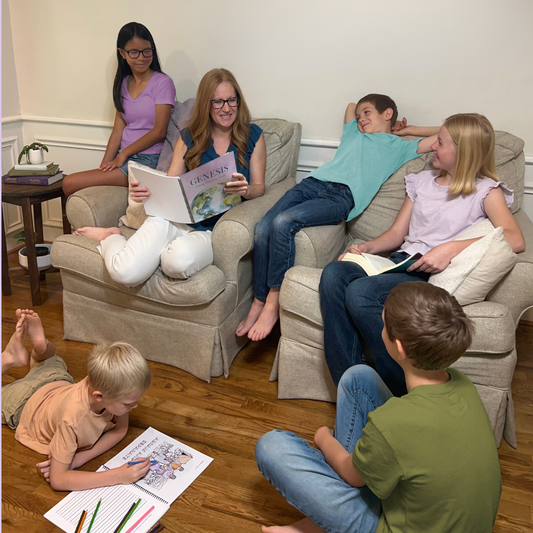
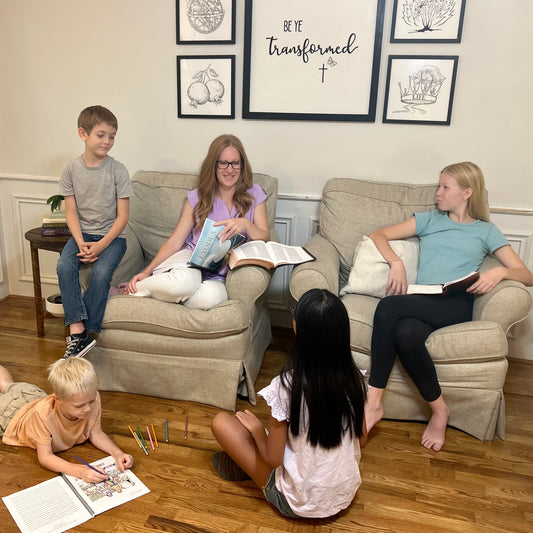
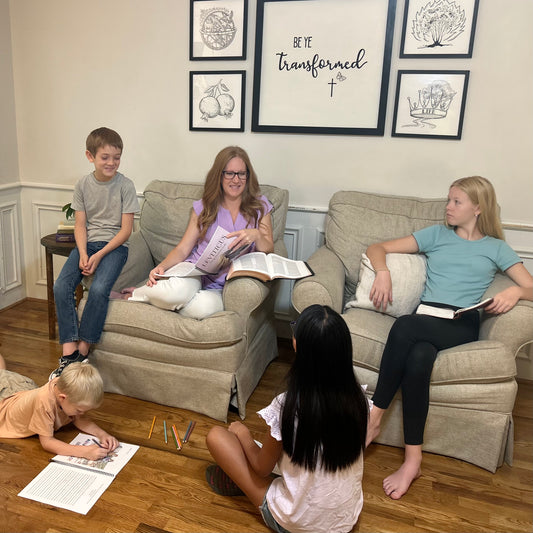
If you have little ones around while you’re doing Bible time with older siblings, you might think they aren't getting anything out of it. They’re coloring, they’re playing with blocks, or they’re jumping off the couch like superhero.
But here’s the secret: they're listening.
Even if they aren't sitting still with their hands in their laps, they're soaking it in. They hear the names of Jesus, Noah, Abraham, Peter. They hear the tone of your voice when you pray. They see that the Bible is a book that occupies a special place in your home. Just like we talked about in my post on keeping little ones busy during Bible time, they're picking up so much more than we realize just by being in the room. Being "ready" for the Bible doesn't mean they'll be ready for a theology exam any time soon; it means they're part of a family that loves the Lord. If you want to have a dedicated Bible time just for your littles, that's great! Helpful resources are listed below!

Why You’re Never Too Late
On the flip side, maybe your kids are ten, twelve, or fifteen, and you’re just now feeling the nudge to start a regular Bible study. You might feel a little guilty, like you’ve left them behind.
Let’s nip that in the bud right now. It is never too late to start.
The goal isn't to make up for lost time with three-hour lectures; the goal is to help your child love the Bible today. God’s Word is "living and active," and it doesn't have an expiration date on when it can transform a heart. If you’re starting later, just be honest with them. Say, "Hey, I realize we haven't made this a priority, and I want us to start learning together." Kids appreciate authenticity way more than they appreciate us pretending we have it all figured out. The upside is that you can start out with deeper discussions of the Bible!

Finding the Right Fit
The key to success at any age is using what meets kids where they are. You wouldn’t give a toddler a steak, and you wouldn't give a teenager a sippy cup. Here are some of my favorite resources for different ages:
- For the Littlest Ones (Ages 0-4): Look for something sturdy and simple. The Big Picture Story Bible by David Helm has bright pictures, and the chapters are short enough to finish before they crawl away.
- For Young Readers (Ages 5-7): The Jesus Storybook Bible by Sally Lloyd-Jones is great because it helps kids see that every story points to Jesus. All five of my kids also loved The Rhyme Bible Storybook by Linda Sattgast.
- For Transitioning Readers (Ages 7-8): We used More than a Story: Old Testament by Sally Michael. I love it because it bridges the gap between storybook Bibles and the "real" Bible. It tells all the stories of the Bible with pictures and an emphasis on God's character. (My boys thought her Old Testament Bible was fantastic! They were seriously excited about all the stories. Sadly, I'm not a fan of her New Testament Bible. It's pretty wordy. It wasn't working for us, so we switched to me reading them the stories of Jesus from my Bible. Then they got easy-to-read "real" Bibles, and we started over, working through Genesis with my "big kid" Bible discussion guides.)
- For Independent Readers (Ages 9-12): This is a great time to transition to a full-text Bible that’s easy to read. The NIrV is a popular choice because the vocabulary is easy, while sticking closely to the adult translation. When your kids leave storybook Bibles behind, Bible reading can feel overwhelming for them. It's easy to hand kids this age a book and then check out, but pre-teens and teens still need discussion and guidance—just at a higher level than before.
- For Teens (Ages 13+): It's time to use a standard translation (like the ESV, NASB, NIV). As teens are growing up and are faced with more, be sure to continue discussing the Bible so they can talk through the hard questions with you. Our discussion guides are a great way to work through the Bible, because they don't gloss over tough issues.
 Is your child ready?
Yes! Whether they're two months old and just hearing the rhythm of your voice as you read, or seventeen years old and looking for answers to life’s biggest questions, they're ready.
The perfect time to start is now! You've got this!